The Evolution of Graphics in Virtual Reality Games
18 June 2026
Virtual reality gaming has come a long way, hasn’t it? It wasn’t too long ago that “virtual reality” made us think of clunky headsets and pixelated worlds that barely resembled reality. Fast forward to today, and we've got jaw-dropping visuals, hyper-realistic environments, and immersive tech that can make you forget you’re in your living room with Cheeto dust on your fingers.
So, how did we get here? Let’s take a journey through the evolution of graphics in virtual reality (VR) games and see how they’ve transformed from blocky nightmares to beautiful alternate realities.
The Humble Beginnings of VR Graphics
Remember Virtual Boy?
If you’ve been around gaming long enough, you might remember Nintendo’s Virtual Boy from the mid-90s. It was marketed as VR, but let’s be honest—it was mostly red lines on a black screen. No depth, no texture, barely any motion tracking. But it was the first flicker of an idea: what if games could surround us?Even before that, in the 80s, there were primitive VR experiments—polygonal graphics, extremely limited interaction, and very basic 3D worlds. Still, those early steps laid the groundwork for everything that came next.
The Early 2000s: VR Tries Again
With the rise of more powerful PCs and early GPU advancements, people started to dream big again. Graphics improved slightly—shapes were no longer just cubes, and textures started appearing. But there was a big problem: motion sickness. The worlds were still janky, the frame rates were awful, and the head tracking made people feel like their stomachs were on a rollercoaster.Yet, each failed attempt brought VR closer to what we experience today.
The Oculus Rift Era: A New Dawn
Oculus: A Game-Changer in Every Way
In 2012, the Oculus Rift Kickstarter basically reignited the entire VR industry. Suddenly, people believed VR could actually work. But not just work—work well.While the first dev kits (DK1 and DK2) were still pretty rough around the edges, the commercial release in 2016 was a revelation. Paired with modern GPUs and smarter game engines, VR graphics started to get truly immersive.
Real 3D Textures and Lighting
With the Oculus Rift, you got games with real-time dynamic lighting, normal mapping, and realistic 3D models. And that made all the difference. Suddenly, you weren’t just controlling a character—you were inside the world. Forests actually looked like forests. Monsters were terrifying because they had texture, depth, and lifelike movements.
The Rise of AAA VR Graphics
Enter the Big Guns: Valve, Sony, and More
Valve’s Half-Life: Alyx changed the game—literally and figuratively. It pushed VR visuals to the next level with:- Incredibly detailed textures and environments
- Advanced physics-based rendering
- Fully interactive objects with real-time shadows and reflections
Half-Life: Alyx wasn’t just a VR game, it was a masterclass in graphics design for virtual reality. It took everything we knew about traditional game design and elevated it to fit a fully immersive space.
On the console side, Sony's PlayStation VR delivered better optimization and console-accessible VR gameplay. One major improvement was performance stability—something that helps a lot with motion sickness.
Lighting, Shaders, and Ray Tracing... Oh My!
One major boost to VR visuals in recent years? Ray tracing and real-time lighting. These technologies allow for ultra-realistic shadows, lighting, and reflections. In VR, where immersion is everything, these subtle cues trick your brain into fully buying into the illusion.We’re talking sunbeams that filter through leaves, shadows that stretch across complex terrain, and reflections that bounce off water like they would in the real world. It’s like upgrading your eyeballs!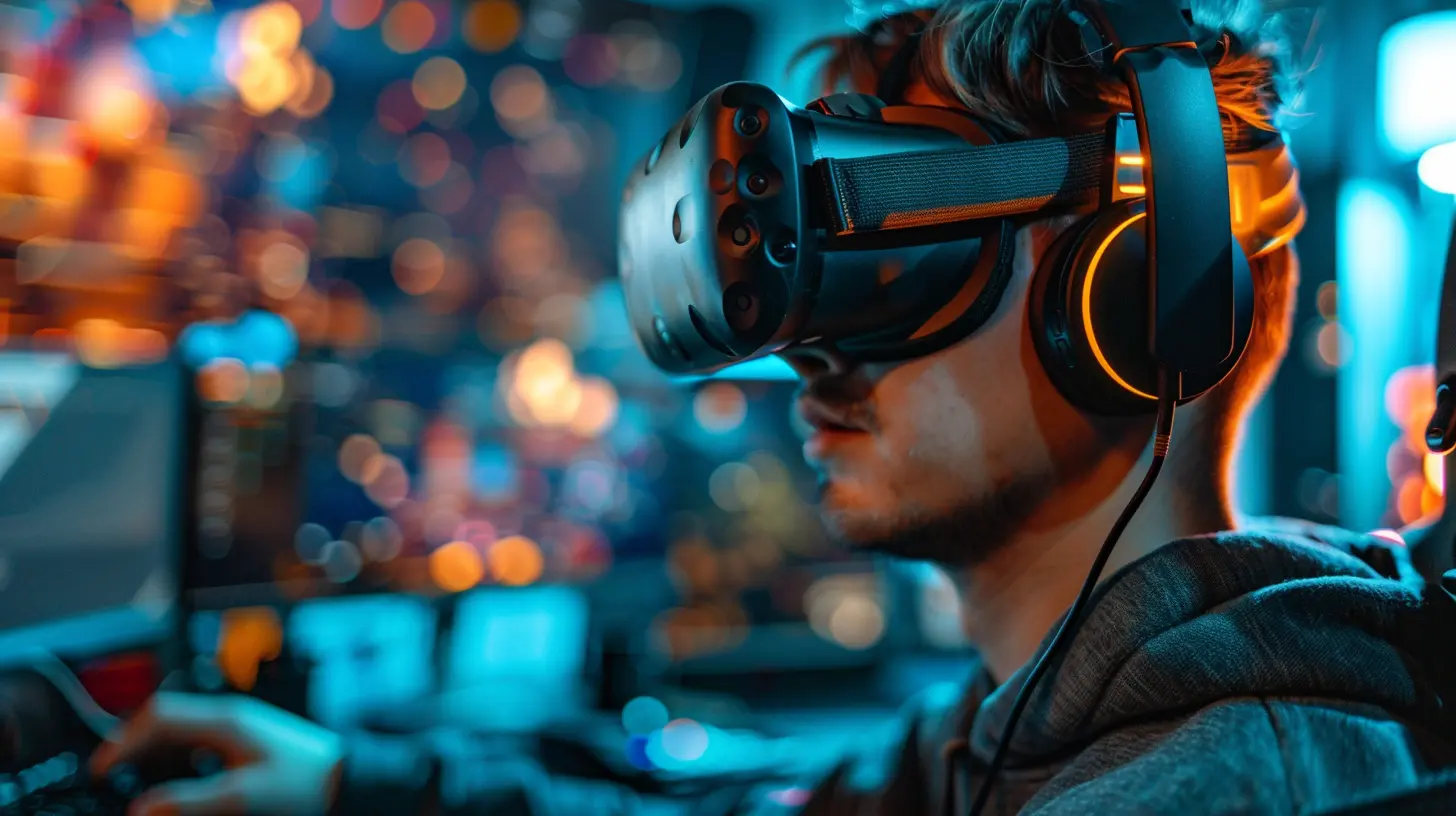
How Game Engines Shape VR Graphics
Unity and Unreal: The Dynamic Duo
Most VR games you love probably run on either the Unity Engine or Unreal Engine. These engines have been crucial in pushing VR graphics forward.- Unity allows small teams to build visually impressive games without needing a massive budget. Great for indie hits like Beat Saber.
- Unreal Engine, on the other hand, is the powerhouse behind those jaw-dropping, photorealistic experiences.
With tools like Nanite (which handles insanely high detail) and Lumen (real-time global illumination), Unreal Engine 5 is literally shaping the next-gen landscape of VR.
Performance Gains = Better Graphics
As CPUs and GPUs improve, so do the graphic capabilities in VR. Modern VR headsets like the Meta Quest 3 or Valve Index can now deliver richer textures, faster frame rates, and more stable environments—without needing a supercomputer to run them.We’ve gone from 60 frames per second being "acceptable," to 120+ FPS being the new gold standard. Why? Because every frame matters when your brain is trying to believe what it’s seeing.
The Mobile VR Revolution
Quest for More (Graphics on the Go)
Mobile VR might not win any awards for realism just yet, but it’s catching up faster than you'd expect. Devices like the Meta (formerly Oculus) Quest 2 and Quest Pro have internal processors powerful enough to deliver surprisingly gorgeous experiences.Thanks to advanced foveated rendering (only rendering what you're directly looking at in high-res), clever upscaling, and optimized engines, even wire-free VR can look crystal clear.
Cloud Gaming and Streaming
Some platforms are experimenting with cloud-based VR rendering—letting powerful data centers handle the graphics and stream them directly to your headset. We’re not quite there yet in terms of latency perfection, but it opens up a new world of possibilities for ultra-realistic graphics on-the-go.The Role of AI and Machine Learning in VR Graphics
Smarter Rendering, Better Immersion
AI isn’t just helping you pick your Netflix recommendations—it’s also reshaping how VR worlds get rendered.- AI upscaling enhances low-resolution textures in real-time
- Procedural generation creates entire worlds with lifelike textures and terrain
- Dynamic eye tracking lets the game render only where you’re looking, saving power and boosting resolution
The future? Hyper-realistic VR spaces that don’t cost a fortune to render. It’s like having a digital artist living in your headset, painting the world as you look at it.
Photorealism vs. Stylization: What’s Better for VR?
Do We Really Need Everything to Look Real?
Sure, realistic graphics are jaw-dropping. But not everything has to look like a nature documentary. Some of the best VR games go for stylized visuals—think cel shading, bright colors, and surreal landscapes.Why? Because not everyone wants to feel like they’re actually standing face-to-face with a zombie (looking at you, Resident Evil VR).
Stylized graphics are also easier on the hardware and often age better. Just like how Wind Waker still looks great while older “realistic” games look like mud pies, stylized VR can stand the test of time.
So, the choice isn’t just about horsepower—it’s about artistic vision and the emotional response you want to trigger in your players.
What’s Next for VR Graphics?
The Future Looks… Unreal (Pun Intended)
Looking ahead, we’re already seeing:- 8K per-eye displays for crisp, retina-level detail
- Haptic feedback suits and gloves to enhance realism beyond visuals
- Eye-tracking paired with AI rendering for seamless performance
- Full-body motion capture, letting avatars reflect you in every way
And let’s not ignore mixed reality. Devices like Apple Vision Pro are blending VR and AR, pushing developers to think about spatial computing graphics—real world + digital world visuals in harmony.
We’re not just evolving VR graphics anymore. We're on the verge of merging realities.
Final Thoughts: It’s Only Getting Better From Here
So, where do we stand? From red lines on a black screen to jaw-dropping, photorealistic VR landscapes, the journey of virtual reality graphics has been nothing short of amazing. And the craziest part? We’re still just getting started.We’ve got better engines, smarter AI, more powerful hardware, and creative minds reimagining what’s possible. The future of VR gaming isn’t just about better graphics—it’s about creating new worlds that feel more real than our own.
So next time you put on that headset, take a second to appreciate how far we’ve come—and imagine how far we’re about to go.
all images in this post were generated using AI tools
Category:
Vr TechnologyAuthor:

Tina Fisher
Discussion
rate this article
1 comments
Blaine Snow
It's amazing to see how far virtual reality graphics have come. Each advancement immerses us deeper into new worlds, enhancing our experiences and pushing the boundaries of gaming creativity.
June 21, 2026 at 5:04 AM
Tina Fisher
Absolutely! The evolution is incredible. Each step forward transforms not just gameplay but our entire perception of virtual worlds. Exciting times ahead!