Why Some Games Are Ditching Maps for Exploration Freedom
17 June 2026
Let’s be real, we’ve all done it—booted up a brand-new open-world game, got control of our character, and immediately opened the map. It’s practically muscle memory at this point. But have you noticed a shift lately? Some games are ditching maps altogether, or at least seriously cutting back on them. And honestly? It’s a bold move, but it's also kind of brilliant.
So why are devs turning the GPS off and going old school with exploration? Let's dive deep into this fascinating trend and unpack why no map might actually mean more fun.
The Good Old Map – A Bit Too Good?
Maps in games serve a purpose. They're handy, right? They tell you where you are, where you’ve been, and where you're supposed to go. For years, open-world games have revolved around them. Think of titles like Skyrim, Assassin’s Creed, GTA, or The Witcher 3. These games offer massive worlds, and maps help make them manageable.But here's the thing: maps have also turned into checklists. Go here, do this, now go there, grab that. It becomes more about following arrows than soaking in the world around you. Kinda defeats the point of an open world, doesn’t it?
Games Are Saying, “Find Your Own Way”
Now let’s talk about the change we’re seeing. Some modern games are intentionally skipping the traditional map system—or at least scaling it way back—and leaving players to explore without much hand-holding. It’s not out of laziness; it’s by design. And it’s totally shaking up how we experience these digital worlds.Games Leading the Way
Here are a few notable titles that have dared to say, “Find your own way, adventurer”:- Outer Wilds – You get a spaceship and some tools, but no map in the traditional sense. You're expected to explore planets based on clues and your own curiosity.
- Shadow of the Colossus (Remake) – It minimizes HUD elements and navigation tools, encouraging players to feel lost and awed in a mysterious land.
- Tunic – A charming indie game where you literally piece together the game’s own instruction manual as you go. The lack of a map adds to the sense of wonder.
- Sable – This one gives you a stunning alien desert and trusts you to wander it using visual landmarks instead of minimaps or GPS waypoints.
These games aren’t just throwing you into the deep end. They’re inviting you to look around, observe the environment, and actually interact with the world—not just chase icons.
The Magic of Getting Lost (On Purpose)
There’s an undeniable thrill to getting lost. And guess what? Game developers know that.When a game takes away your map, you're forced to use your surroundings. You start paying attention to landscapes, listening to sounds, and remembering where the weirdly-shaped rock was that pointed you toward the creepy cave. You become more engaged. You're not just “playing a game”; you’re discovering a world.
It Feels More Organic
Without a giant checklist of objectives, your journey becomes your own. You might stumble upon a hidden cave or an NPC you weren’t expecting. That surprise? Way more exciting than ticking off the 13th glowing dot on your map.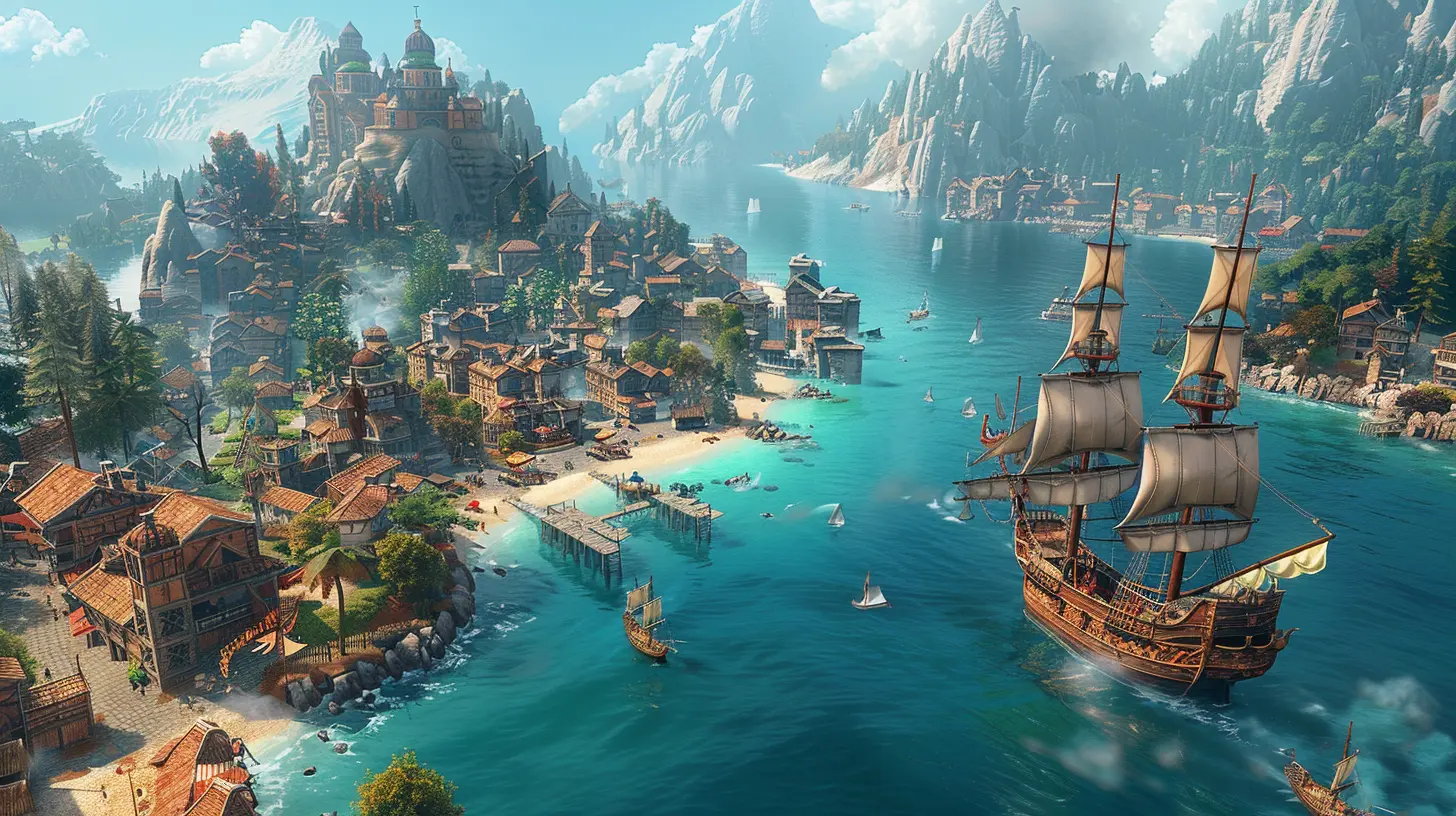
Why Ditching Maps Actually Works
At first, it sounds counter-intuitive. We’re in the age of massive worlds with hundreds of hours of content. Why wouldn’t you want a map?Well, here’s why developers are making that call:
1. It Boosts Immersion
The lack of a map puts you in the character’s shoes. You don’t know the land? Makes sense—your character doesn’t either! You’re experiencing the world alongside them. And that’s powerful. It closes the gap between player and protagonist.2. It Slows You Down (In a Good Way)
Open-world games can be overwhelming. Turning off the map actually encourages you to slow down, savor the scenery, and take in the tiny details. You stop sprinting past sunsets and start noticing them.3. It Encourages Real Exploration
When you’re not following a glowing path, your curiosity leads you. That ridge? Let’s climb it. That weird tree in the distance? Maybe it's important. It switches your mindset from “Where should I go next?” to “What’s over there?”4. It Makes the World Feel Bigger
Here’s the kicker—without a map, the world feels enormous. You’re not constantly zooming out to see how much is left. Each area feels like uncharted territory, which is pretty exciting for seasoned gamers used to constant direction.The Challenges of Map-Free Design
Of course, this design trend isn't perfect. It comes with its own set of hurdles.Not for Every Player
Some folks need direction. Maybe you don’t have time to wander around for 45 minutes trying to find the next mission. Or maybe you're just the kind of player who enjoys structure.That’s totally fair. Not every game has to ditch the map, and not every gamer wants it gone. The key is balance.
Risk of Frustration
Without proper design, “freedom” can feel a lot like “confusion.” If landmarks aren’t clear, or if the game world isn’t logically designed, players can get turned around and annoyed fast. That’s why games that go mapless often put tons of work into environmental storytelling and visual cues.Environmental Clues: The New Compass
Without maps, games lean heavily on environmental design to guide players. That means smart placement of landmarks, lighting, sound, and visual storytelling.Remember Journey? It didn’t need a map because the environment subtly guided you forward. A mountain on the horizon, a flow of the sand, the way the wind blew—it all steered you without a single icon.
In Elden Ring, although there is a map, players often navigate by sight and landmarks. That glowing tree in the distance? That’s your lighthouse in the fog. The same goes for many games today, which are investing in worldbuilding in a way that tells the story through the terrain.
Nostalgia Plays a Role Too
Let’s not forget, before fast travel and GPS-maps, we used to draw our own maps on notebook paper. Anyone remember trying to remember where the red door was in the original Resident Evil? Or where that one secret path was in Metroid?Mapless design taps into that sense of mystery and childhood imagination. Suddenly, every corner is a new adventure.
The Shift in Game Philosophy
Ultimately, the move away from maps represents a shift in how developers view their players.It’s basically the devs saying, “We trust you.”
They believe we can handle a little confusion. That we’re smart enough to figure things out. That we don’t need glowing breadcrumbs to feel rewarded.
And honestly? That kind of respect can feel pretty refreshing.
Should All Games Ditch Maps?
Nope. Definitely not. For some games—think strategy games, massive RPGs or massive multiplayer games—a map is essential. There’s just too much going on.But for the right kind of game? A mapless world can be a revelation. It adds depth, tension, emotion, and yes—even joy.
Conclusion: Lost, But In a Good Way
In an age where we’re so used to being told exactly where to go and what to do, games that don’t hold your hand feel like a breath of fresh air.They ask us to look, listen, learn—and to experience rather than just consume. Sure, you might get lost. But maybe, just maybe, that’s the whole point.
Maybe it’s not about the destination anymore. Maybe it’s all about the journey.
So the next time you find yourself in a game without a map, don’t panic. Embrace the uncertainty. You might just find something amazing over that next hill.
all images in this post were generated using AI tools
Category:
Game TrendsAuthor:

Tina Fisher
Discussion
rate this article
1 comments
Sawyer McGonagle
Maps are overrated. True adventure lies in the unknown, not in following a highlighted path...
June 17, 2026 at 3:09 AM