The Surprising Popularity of Simulation Games
11 December 2025
Simulation games. You’ve seen them. You’ve probably played one—maybe even lost track of time in one without realizing it. Whether you're managing a city, running a farm, flying a plane, or even living someone else's everyday life, sim games have this weirdly addictive pull. But have you ever stopped to wonder why they're so wildly popular? I mean, in an age of fast-paced shooters and graphic-heavy RPGs, the quiet charm of simulation games is kind of… surprising, right?
Well, buckle up, because we’re diving into the fascinating world of simulation games, breaking down why they’ve captured millions of players, and how they’ve become a powerhouse in the gaming universe.
What Are Simulation Games, Anyway?
Before we get into the meat of it, let’s clear up what we’re talking about. Simulation games are exactly what they sound like—they simulate real-life (or fantastical) experiences. Think of them as digital sandboxes where you can experiment, build, and live out various scenarios.From ultra-realistic flight simulators to zany goat simulators (yes, really), the genre is super broad. But at their core, sim games give you control—total, satisfying control.
A Genre for Everyone (Literally)
Now here’s where it gets interesting. Simulation games have the kind of broad appeal most game genres can only dream of. Why? Because there’s something for everyone.- Love animals? Try Zoo Tycoon or Planet Zoo.
- Wanna live someone else’s life? Boom, The Sims.
- Always dreamed of running a farm? Stardew Valley’s got you.
- Like trains, planes, or trucks? Yep, there’s a sim for that too.
Unlike other genres that might require lightning reflexes, deep lore knowledge, or hours of practice, simulation games are way more accessible. You're invited in at your own pace. It doesn't rush you. It's like a cozy cup of tea on a rainy day.
The Cozy Appeal: Comfort Gaming at Its Best
Let’s face it—life’s chaotic. Simulation games? Not so much. They give you structure, goals, and often a serene backdrop. It’s no wonder people turn to games like Animal Crossing and Stardew Valley when the world outside feels a little... much.In fact, during the early months of the pandemic, sim games saw a massive surge in popularity. Animal Crossing: New Horizons basically became a cultural phenomenon overnight. Players built islands, visited friends, sent letters—and all while stuck indoors.
Simulation games became a digital escape, a peaceful routine in a not-so-routine world.
The Power of Control and Creativity
One of the biggest reasons people love simulation games is the sheer level of control. You’re the boss. The architect. The controller of destiny, even if it’s just the simulated destiny of an airport or a medieval town.Want to build a perfect city with zero traffic? Cities: Skylines lets you do that.
Want to create your dream home down to the last tile and couch cushion? The Sims 4 is basically therapy.
Simulation games turn you into a creator, and that kind of experience is deeply satisfying—especially when real life often feels out of your hands.
Real Skills in a Virtual World
Here’s the kicker—some sim games actually teach you stuff. Like, real-world usable skills.- Flight simulators? Used by actual pilots-in-training.
- Farming simulators? Used by agriculture students and professionals.
- Truck simulators? Honestly, they make you respect logistics a whole lot more.
Even beyond professional applications, sim games can boost planning, time management, and problem-solving skills. Honestly, if you’ve ever kept a city running without collapsing into chaos in Cities: Skylines, you deserve a municipal planning degree.
Community and Content Creation: A Match Made in Sim Heaven
You know what else makes simulation games thrive? Their communities.The Sims has a massive player base constantly swapping custom content—from hairstyles and outfits to entire house plans. There’s an entire ecosystem of modders supporting the genre.
And let’s not forget YouTube and Twitch. Ever watched a streamer create chaos in SimCity or build the most ridiculous roller coaster in Planet Coaster? It’s fun. It’s hilarious. It’s the kind of content that never gets old.
Simulation games are tailor-made for storytelling, and that’s catnip for content creators.
The Rise of Indie Sim Games
Here’s another twist: simulation games aren’t just a playground for big-name developers anymore. Indie devs have entered the chat—and they’re killing it.Take Stardew Valley, a farming sim originally created by just one guy. It’s sold millions of copies and has a hardcore fanbase. Then there’s RimWorld, a colony sim with deep storytelling mechanics and tons of replayability.
Indie studios are innovating the genre, blending simulation mechanics with roguelikes, narratives, and more. They’re not bound by formulas, and that’s breathing new life into the sim space.
Long-Term Engagement and Replayability
Most games have a finish line. You defeat the boss, you save the world, and boom—you’re done.Simulation games? They don’t really end. You could keep your virtual theme park running forever. Your digital farm can be passed down for generations (sort of). That infinite gameplay loop is a huge part of their appeal.
Plus, no two playthroughs are the same. Change one decision, take a different strategy, build in another biome—it all drastically alters your experience.
It’s like a never-ending story where you’re both the author and the main character.
Nostalgia and the Feel-Good Factor
Let’s be real for a second. There’s also a serious nostalgia factor here.If you grew up playing RollerCoaster Tycoon or SimCity, firing up a simulation game today feels like wrapping yourself in a warm, pixelated blanket. There’s something inherently comforting about it.
Even the newer titles often pay homage to the classics. They understand that sometimes, players just want to feel good. No pressure. Just chill vibes and digital cows.
Bridging Generations: From Kids to Grandparents
You’d be surprised at the wide age range of simulation gamers. Kids love the creativity and goofiness. Adults enjoy the strategy and relaxation. Even older folks have found joy in games like Microsoft Flight Simulator or Farming Simulator.It brings generations together. Everyone plays at their own pace, in their own way. And that’s kind of beautiful, tbh.
VR and the Future of Simulation Games
Okay, now let’s look ahead for a sec. Virtual Reality is adding a whole new dimension to simulation games.Ever tried VR flight simulation? It’ll make your stomach drop—in a good way. Want to be a surgeon without the med school debt? VR has a sim for that too.
As technology levels up, simulation games are only going to get more immersive and realistic. The line between game and reality? It's already getting blurry.
Final Thoughts: Why We Keep Coming Back
So, why are simulation games so wildly, surprisingly popular?Because they give us agency in a world that often feels out of control. They let us be creative. They’re calming, funny, educational, and just plain rewarding.
They’re also super inclusive, welcoming all kinds of players regardless of skill level or gaming background.
So whether you’re flying a Boeing 747, collecting eggs on a pixelated farm, or building a haunted theme park, one thing’s clear: simulation games are here to stay. And honestly? We wouldn’t have it any other way.
Bonus: Top 10 Simulation Games to Check Out
Just starting your sim journey or looking for your next obsession? Here’s a quick list to get you going:1. The Sims 4
2. Stardew Valley
3. Cities: Skylines
4. Microsoft Flight Simulator
5. Planet Zoo
6. Two Point Hospital
7. Euro Truck Simulator 2
8. RimWorld
9. Animal Crossing: New Horizons
10. Farming Simulator 22
Try one. Try them all. Just don’t forget to eat and sleep in real life too, okay?
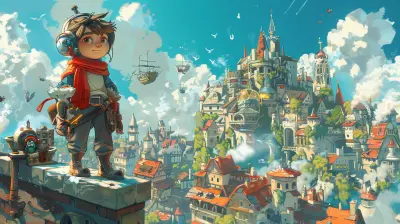
all images in this post were generated using AI tools
Category:
Game TrendsAuthor:

Tina Fisher
Discussion
rate this article
2 comments
Coral McKee
Simulation games offer players unique experiences and endless creativity, allowing them to escape reality while honing skills. Their rising popularity reflects a desire for immersive gameplay.
December 22, 2025 at 3:57 PM
Tina Fisher
Thank you for your insight! I agree—simulation games truly provide a creative outlet and immersive experiences that resonate with many players seeking both escape and skill development.
Onyx Thornton
Simulation games creatively engage players, offering immersive experiences and endless possibilities.
December 19, 2025 at 5:54 AM
Tina Fisher
Thank you! Simulation games truly provide a unique platform for creativity and exploration, allowing players to dive into diverse worlds and scenarios.